Custom UI Features and Their Link to Game Preferences in Online Casinos
Written by Sage Vogel · Sep 7, 2026
Custom UI Features and Their Link to Game Preferences in Online Casinos
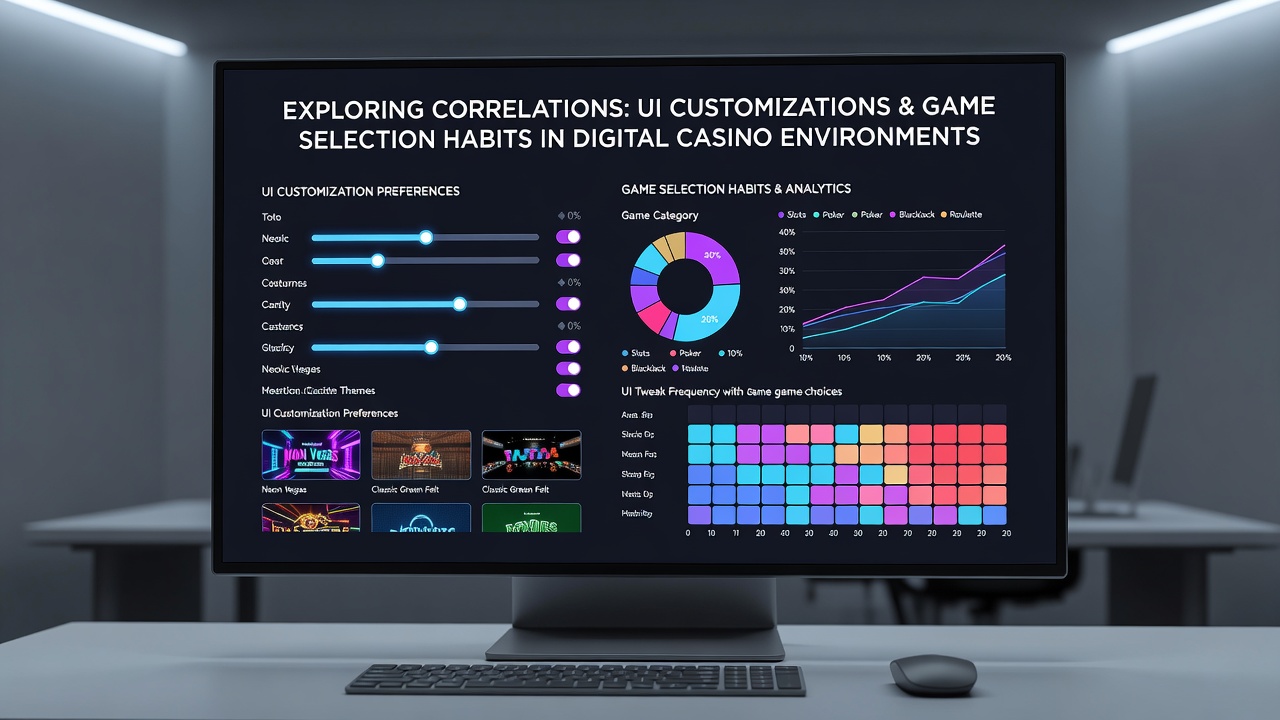
Digital casino platforms collect extensive data on how players adjust layouts, color schemes, and navigation tools, and researchers track these adjustments against the titles users choose most often. Studies from institutions in North America and Europe show measurable shifts in selection patterns once users modify elements such as quick-bet buttons, theme toggles, and information density sliders. Data released in September 2026 by the Canadian Centre for Gaming Research indicated that players who enabled simplified menu views increased their frequency of selecting table games by 18 percent over a six-month period compared with those who left default settings unchanged.
Tracking Interface Changes Across Platforms
Operators record every toggle and resize action through backend analytics suites, then cross-reference the logs with session data on game categories. Australian researchers at the University of Sydney published findings in early 2026 that linked darker color palettes with higher roulette engagement, while brighter palettes correlated with more slot spins per hour. The same report noted that users who activated compact card views on mobile apps spent 12 percent longer in blackjack sessions than those retaining standard card sizes.
Regional Data Patterns and Selection Trends
European operators participating in a multi-country study coordinated by the Malta Gaming Authority supplied anonymized records covering more than 2.3 million accounts. Analysts found that players who customized notification settings to reduce pop-ups selected fewer progressive jackpot slots and more live dealer tables. In contrast, users who increased visual effects sliders showed elevated interest in high-volatility video slots. These patterns held steady across age groups when researchers controlled for session length and deposit frequency.
One longitudinal project in New Zealand examined the effect of font-size adjustments on game navigation. Participants who enlarged text elements navigated toward information-heavy games such as video poker at higher rates, whereas those who kept default sizes gravitated toward faster-paced options. The study authors published their dataset in mid-2026, allowing other teams to replicate the methodology across different regulatory environments.
Methodologies Used in Recent Analyses
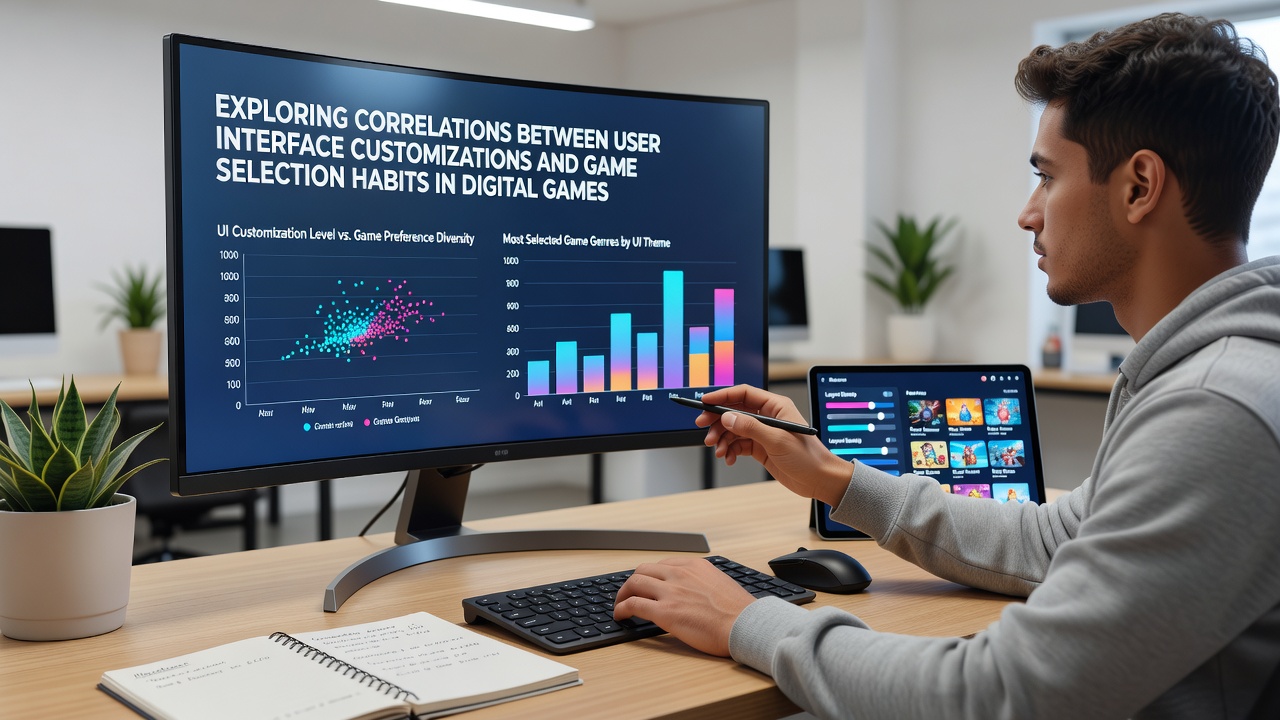
Teams apply clustering algorithms to group users by the number and type of customizations performed within the first three sessions. They then compare these clusters against subsequent game selection logs. A 2025 report from the National Institute for Gaming Studies in the United States demonstrated that users who altered at least four interface elements within the first hour exhibited a 27 percent higher probability of exploring new game categories than those who made no changes. The analysis drew on transaction records from operators licensed in New Jersey and Pennsylvania.
Researchers also examine the timing of customizations. Changes made before the first deposit correlated more strongly with broad exploration, while adjustments performed after several sessions aligned more closely with deepening engagement in already-favored titles. These temporal distinctions appear in datasets from both regulated North American markets and offshore platforms that share anonymized metrics with academic partners.
Platform Design Responses to Observed Patterns
Design teams adjust default configurations based on aggregated findings rather than individual preferences. Several major platforms introduced optional preset modes in 2025 that mirror the most common customization clusters identified in prior research. Early results shared with the Asia-Pacific Gaming Association suggest these presets reduce the average time to first game selection by 14 seconds without altering overall category distribution.
Operators continue to test variations in button placement and information hierarchy, measuring downstream effects on game selection through controlled A/B deployments. Data shared at industry forums in 2026 indicate that modest repositioning of the account balance display can shift user attention toward games with visible balance requirements, such as certain table game variants.
Conclusion
Available datasets demonstrate consistent associations between specific interface modifications and subsequent game selection habits across multiple jurisdictions. Continued collection of anonymized interaction logs will allow further refinement of these observed relationships as platforms evolve through 2026 and beyond.